
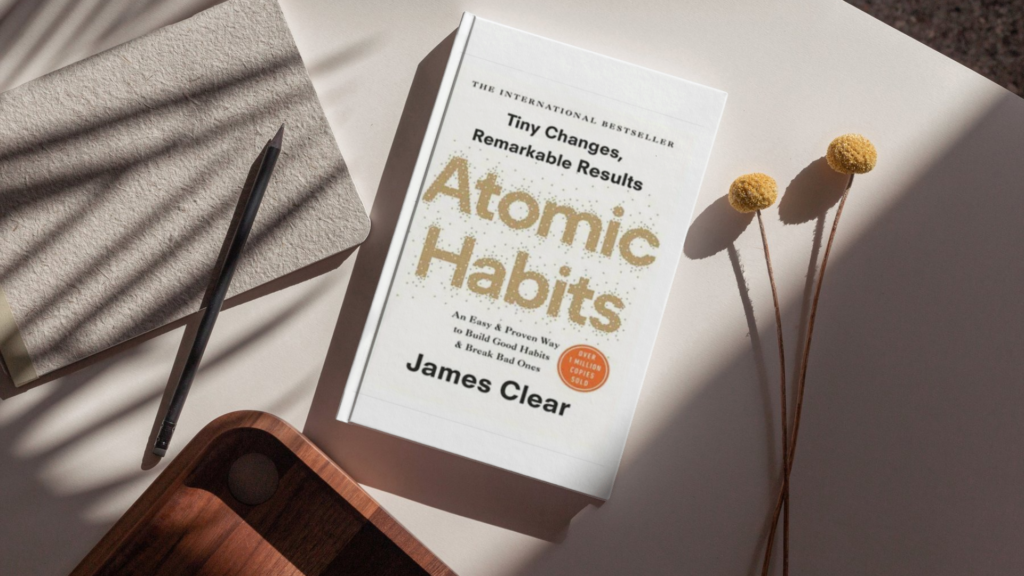
There’s a specific kind of frustration that comes from knowing exactly what you want to change — and still not changing it.
You’ve tried the morning routines. You’ve downloaded the habit trackers. You’ve started Mondays with the best intentions, only to find yourself back at square one by Thursday. It’s not a motivation problem. It’s not a willpower problem either, even though it really feels that way.
That’s exactly where Atomic Habits by James Clear comes in — and honestly, it’s one of the few self-help books that actually earns its reputation.
This Atomic Habits review will walk you through what the book is really about, the lessons that stuck with me, what could be better, and whether it’s worth your time and money in 2026.
Quick Overview
| Overall Rating | 4.7 / 5 |
| Best For | Beginners in self-improvement, people struggling with consistency |
| Reading Difficulty | Easy — very accessible prose |
| Practical Value | Extremely high |
| Worth Buying? | Yes, absolutely |
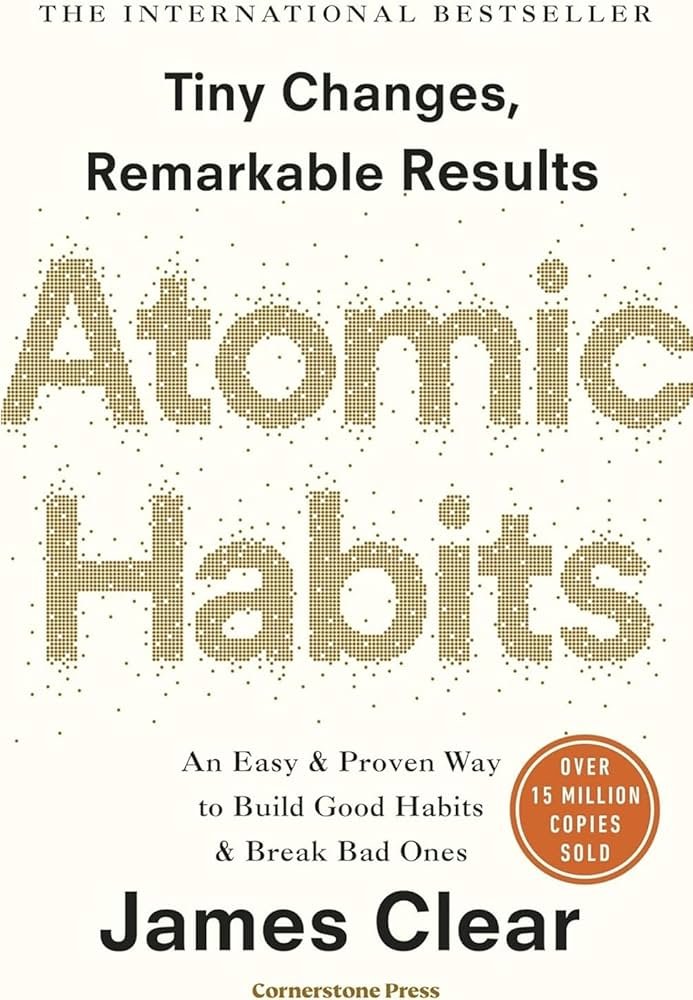
Author: James Clear
Published: October 2018
Genre: Self-help, Productivity, Psychology
Pages: ~320
James Clear isn’t an academic or a therapist. He’s a writer who became obsessed with the science of habits after a serious injury derailed his baseball career in high school. That personal starting point matters — it gives the book a grounded, human quality that a lot of productivity books lack.
Atomic Habits spent years on bestseller lists and has sold over 15 million copies worldwide. It didn’t blow up because of hype. It blew up because the advice works — and more importantly, it works for regular people who aren’t already ultra-disciplined.
Spoiler-Free Summary
At its core, Atomic Habits argues that lasting change doesn’t come from dramatic overhauls — it comes from tiny, consistent improvements that compound over time.
Clear introduces a practical framework called the Four Laws of Behavior Change, built around how habits actually form in the brain: cue, craving, response, reward. He then shows you how to design your environment, your identity, and your daily systems so that good habits become easier and bad habits become harder.
It’s less about motivation and more about architecture — building a life where the right behaviors almost happen automatically.
7 Key Lessons from Atomic Habits
1. Small Habits Compound Into Big Results
The book opens with a deceptively simple idea: 1% better every day equals 37 times better by the end of a year.
Most people dismiss small habits because they don’t feel meaningful. Reading one page doesn’t feel like becoming a reader. Doing five push-ups doesn’t feel like getting fit. But Clear makes a convincing case that the size of the habit doesn’t matter as much as the consistency of the system behind it.
The compound effect isn’t just a motivational concept here — it’s a mathematical reality. And once you genuinely internalize that, you start looking at your smallest daily choices very differently.
2. Identity-Based Habits Change Everything
This is probably the most genuinely useful idea in the entire book, and it’s worth sitting with.
Clear distinguishes between two ways of trying to build habits:
- Outcome-based: “I want to run a marathon.”
- Identity-based: “I am someone who runs.”
The shift sounds subtle. In practice, it’s huge. When your goal is an outcome, every skipped day feels like failure. When your goal is an identity, every single rep — however small — is a vote for the person you’re becoming.
It reframes consistency not as discipline, but as self-proof. You’re not trying to achieve something. You’re trying to become someone. That’s a much more durable motivational engine.
3. Systems Beat Goals Every Time
Clear’s take on goals is one of the more controversial parts of the book — and one of the most clarifying.
His argument: goals are fine for direction, but systems are what actually produce results. Two athletes can share the same goal (win the championship) but the one with the better daily system wins. The goal didn’t determine the outcome. The process did.
This matters because most people set goals and then feel stuck when nothing changes. The problem isn’t the goal — it’s that they haven’t built the system underneath it. Atomic Habits is, essentially, a manual for building those systems.
4. Environment Design Is a Superpower
You are not as in control of your behavior as you think you are. Your environment is constantly nudging you toward certain choices — and most of the time, you don’t notice.
Clear devotes significant attention to environment design: the idea that you can architect your surroundings to make good habits obvious and bad habits invisible. Want to read more? Put the book on your pillow. Want to eat less junk food? Don’t keep it in the house.
This isn’t new advice, exactly. But the way Clear frames it — as a design problem rather than a willpower problem — genuinely shifts how you approach behavior change. You stop blaming yourself and start redesigning your space.
5. Habit Stacking Makes New Habits Stick
One of the most practical tools in the book is habit stacking: attaching a new habit to an existing one.
The formula is elegantly simple: “After I [CURRENT HABIT], I will [NEW HABIT].”
After I pour my morning coffee, I will journal for five minutes. After I sit down at my desk, I will write my three priorities for the day. It sounds almost too simple — but it works because it uses the neural pathways you’ve already built as an anchor for the new behavior.
For beginners in self-improvement especially, this technique alone is worth the price of the book.
6. Consistency Over Intensity
One of the more quietly radical ideas in Atomic Habits is this: never miss twice.
Missing a day isn’t the problem. Life happens. What breaks habits is the spiral that follows — missing one day, feeling guilty, missing another, and suddenly the habit is gone. Clear’s rule is simple: if you miss once, make it a priority to show up the next day. One missed day is an accident. Two missed days is the start of a new habit.
This framing removes so much of the shame and perfectionism that quietly kills most people’s self-improvement attempts. You don’t need a perfect streak. You need a pattern that survives interruption.
7. Reduce Friction to Increase Follow-Through
Clear introduces the Two-Minute Rule: when starting a new habit, scale it down until it takes two minutes or less.
Want to exercise daily? Your habit is to put on your workout clothes. Want to meditate? Sit on the cushion for two minutes. The point isn’t that two minutes is the goal — it’s that starting is the hardest part, and making the entry point tiny removes the resistance that stops most people before they begin.
Reduce friction for good habits. Increase friction for bad ones. It’s behavioral science applied to everyday life, and it’s surprisingly effective.
What I Loved About This Book
It’s Genuinely Practical
A lot of self-help books are heavy on inspiration and light on what to actually do on a Tuesday morning. Atomic Habits is the opposite. Every chapter ends with something you can apply immediately. It reads less like a philosophy book and more like a well-researched user manual for your brain.
The Science Feels Accessible, Not Overwhelming
Clear draws on behavioral psychology, neuroscience, and habit research — but he translates it into plain language. You never feel like you need a PhD to follow along. That accessibility is rare and genuinely valuable.
It Meets You Where You Are
The book doesn’t assume you’re already motivated or disciplined. It assumes you’re human — inconsistent, easily distracted, and prone to giving up. That realistic baseline is what makes the advice actually land, especially if you’re earlier in your personal growth journey.
It’s a Book You Can Return To
This isn’t a one-read book. It’s the kind you dog-ear and come back to when a habit is slipping or you’re building something new. The frameworks are durable and reusable across every area of life.
5 Best Quotes from Atomic Habits
“You do not rise to the level of your goals. You fall to the level of your systems.”
“Every action you take is a vote for the type of person you wish to become.”
“Habits are the compound interest of self-improvement.”
“You don’t have to be the victim of your environment. You can also be the architect of it.”
“The most effective form of motivation is progress. When we get a signal that we are moving forward, we become more motivated to continue.”
Who Should Read Atomic Habits?
This book is genuinely one of the best self-help books for beginners — but it’s useful far beyond that.
You should read it if:
- You’ve tried to build habits and struggled with consistency
- You want a practical, science-backed framework for behavior change
- You’re interested in productivity systems but find most content overwhelming
- You’re on a personal growth journey and want to build daily routines that actually last
- You respond well to systems and structure over vague motivational advice
It’s also available as an audiobook (narrated by James Clear himself, which makes it feel especially personal) and on Kindle if you prefer reading digitally.
Is Atomic Habits Worth Reading?
Yes — and I say that with very little hesitation.
Not because it’s perfect or because it will instantly transform your life. But because it gives you a genuinely useful lens for understanding why your habits work or don’t work, and a practical toolkit for redesigning them.
The identity-based habits framework alone has changed how I think about consistency. The habit stacking technique is something I still use. And the reminder that systems matter more than goals has quietly reoriented how I approach long-term projects.
For a book that’s easy to read, grounded in real research, and immediately actionable — it earns its reputation. It’s one of those books about discipline and productivity that doesn’t make you feel bad for being human.
Final Verdict
⭐⭐⭐⭐⭐ 4.7 out of 5
Atomic Habits is the rare self-help book that lives up to the hype. It won’t solve every problem or automatically make you a more disciplined person overnight. But it will give you a clearer understanding of how habits actually form, why they fail, and what you can do — starting today — to build better ones.
If you’ve been on a self-improvement journey for a while and feel like you’re spinning your wheels, this book is genuinely worth your time.
Check current price and reviews on AmazonAnd if you found this review helpful, save it to your Pinterest boards for later — it’s the kind of post worth revisiting when you’re starting a new habit or trying to get back on track.
Enjoyed this review? You might also love:
- The Power of Habit by Charles Duhigg
- Deep Work by Cal Newport
- Essentialism by Greg McKeown
- The One Thing by Gary Keller